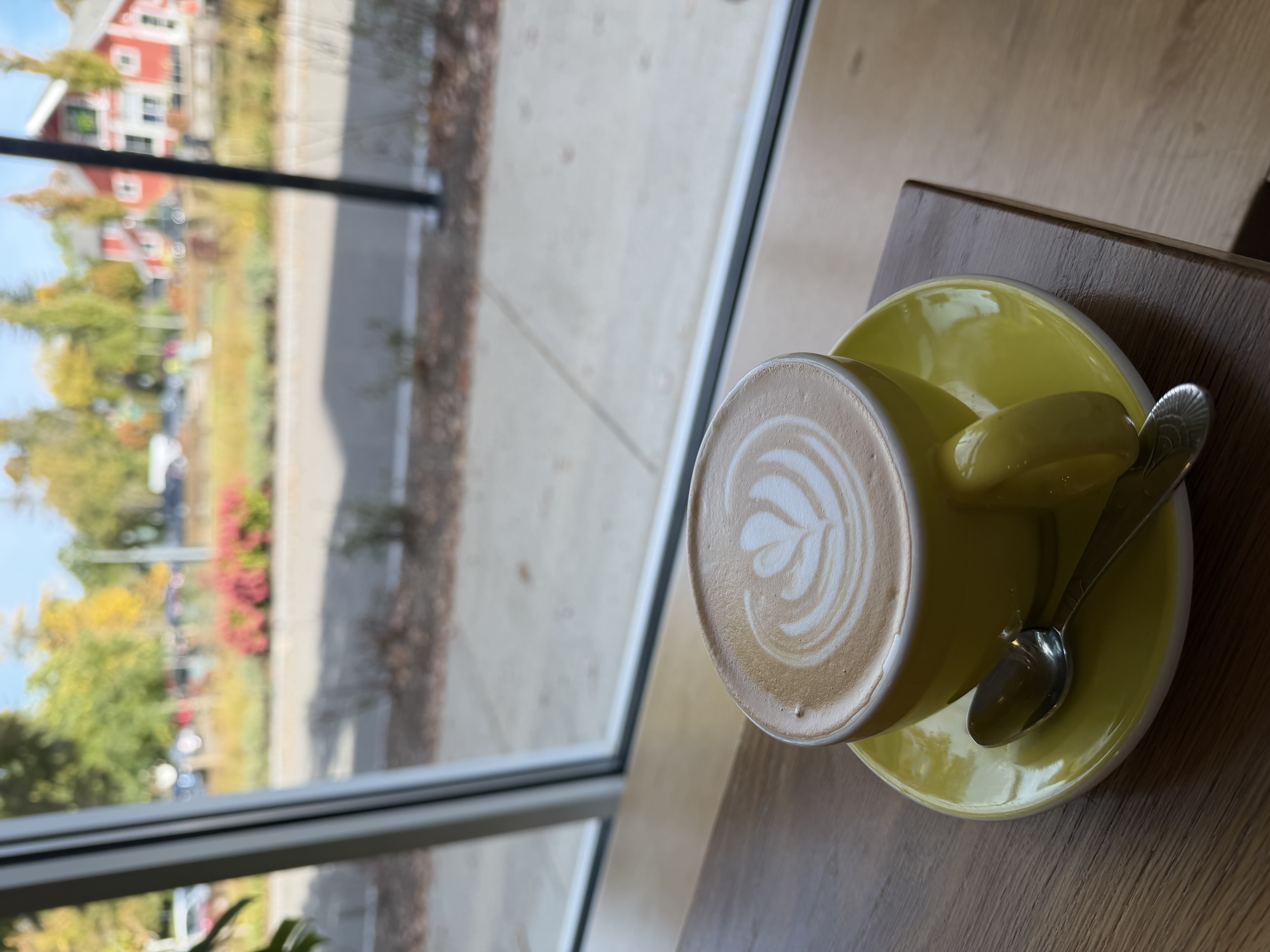
If you love coffee but your nervous system doesn’t, I feel ya!
It is honestly one of my favorite tastes and oh my goodness the aroma but let me tell ya, I’ve had to step away from coffee because my body has made it very clear it’s not for me. If you notice coffee spikes you up fast, drops you down in the afternoon, messes with your sleep, messes with your head, you’re not alone.
For highly sensitive people, caffeine and specifically coffee based drinks hit differently.
It’s not just about the buzz or dopamine boost. Coffee can trigger a cortisol response (Yes, even after a meal. Yes, even with PLENTY of milk and maple, coffee can still be problematic), and for a nervous system that’s already running close to its edge, that spike can tip you right into anxiety, jitteriness, or that uncomfortable wired-ansty-exhausted-panicky feeling. For the slow metabolizers out there, even one cup of coffee can severely impact your sleep. The normal half life of caffeine is 4-6 hours, but for the some slow metabolizers (I am one of them!), the half life of caffeine is about 10-15 hours. So, even if you have one 12 oz. cup of coffee in the morning, that means there might still be significant amounts of caffeine circulating in your system even 10 hours later.
It’s not just because you’re sensitive: there is literally caffeine pumping through your body and preventing your natural circadian rhythm from taking shape. Enter: L-theanine. L-theanine is one of my all time favorite supplements. Yes, I have a handful I love and L-theanine always makes the top 5. L-theanine is an amino acid found naturally in green, white, and black tea, which is part of why tea feels so much calmer than coffee, even when it contains caffeine. It works by promoting alpha brain waves (the ones associated with relaxed alertness), and has been shown in placebo-controlled studies to reduce both the psychological and physiological stress response,including significantly lowering cortisol levels. When paired with caffeine, it doesn’t dull the focus-enhancing effects. It smooths them. It counteracts the jitters by infusing a calm, peaceful, but not at all sedative relaxation. You get the clarity, the mood boost, without the spiky edges.
L-Theanine dosing:
The research points to a 2:1 ratio. So roughly 100–200mg of L-theanine for every 50–100mg of caffeine (one standard cup of coffee). You can find L-theanine as a standalone supplement, or look for a matcha latte if you want a naturally balanced option. (One cup of matcha has about 50mg of caffeine and 20-40mg of L-theanine, so if you’re highly sensitive, you might still benefit from adding in a little extra dose of L-theanine on the side). For sensitive souls, taking 200-400 mg of L-theanine before you have coffee *might* counteract the jitters entirely. (During times of high stress, I regularly take 400mg an hour before bed with magnesium taurate or threonate and it’s improved my sleep more significantly than any other intervention). This small shift can make coffee feel like a tool again.
Or, if your body is still not handling coffee well (when consumed after breakfast and with plenty of milk/cream/half & half, maple/honey/sugar/panela, etc.), you might consider experimenting with supplemental L-theanine, shifting to matcha, and maybe just a few sips of coffee for the joy without it spiking your cortisol or messing up your sleep that night.
Have you tried L-theanine with your morning coffee or tea?
Do you notice a different feeling when you have matcha instead of coffee?
If caffeine on an empty stomach messes with your energy, mood, and sleep, have you considered trying it AFTER your breakfast and with double the amount of L-theanine on board?
I’d love to know what works for you and how you’re learning to work with your uniquely sensitive body!
And if you'd like more regular musings like these, consider joining my Community Membership!
You'll have full access to my monthly Q+As to ask all your burning health questions, a full library of 280+ nervous-system focused videos, a community forum with like-minded self-healers, and a mobile app to peruse and engage at your leisure :)